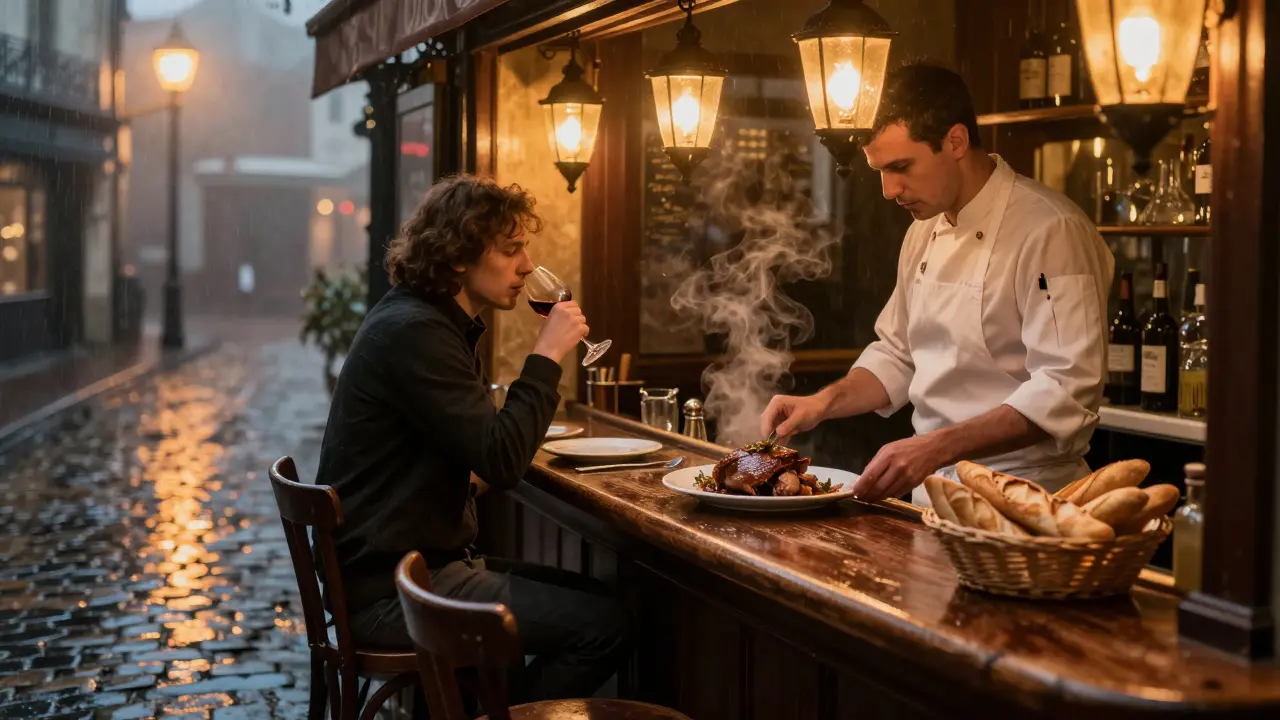
Paris doesn’t sleep when the sun goes down-it just changes menus. While tourists flock to the Eiffel Tower by day, locals know the real magic happens after 8 p.m., when the city’s kitchens heat up and the scent of seared duck, fresh baguettes, and simmering wine sauces fills the narrow streets. This isn’t just about eating. It’s about rhythm. About the clink of wine glasses in a dimly lit bistro, the hum of conversation in a hidden alleyway tavern, the way a perfectly toasted croissant tastes at 2 a.m. after a long night out. Paris by night is a culinary journey, and you don’t need a reservation at a Michelin star to taste it.
Where the Locals Eat After Midnight
Forget the guidebooks listing the same ten restaurants. If you want to eat like someone who’s lived here for decades, head to Le Comptoir du Relais in Saint-Germain. Chef Yves Camdeborde turned this tiny 22-seat spot into a legend by serving simple, flawless French food-duck confit, escargots in garlic butter, a cheese plate that changes daily-until 1 a.m. on weekends. No online booking. No menu online. Just walk in, grab a stool at the bar, and let the waiter decide what’s best that night.
Down in the 11th arrondissement, Le Baratin is where chefs go after their own shifts end. It’s unassuming: mismatched chairs, chalkboard menu, no signage. But the wine list? Handpicked by sommeliers who know every small producer in the Loire and Burgundy. The food? Rustic, bold, and cooked with zero pretense. A plate of beef tartare here costs €14 and tastes like it was made by your French grandmother if she ran a bistro.
And then there’s Le Petit Vendôme, a 24-hour brasserie near the Opéra. It’s the kind of place where a business traveler eats foie gras at 3 a.m. after a red-eye, and a student from the Sorbonne shares a bottle of Beaujolais at 4 a.m. after a club night. The menu doesn’t change. The lights don’t dim. And the waiters? They’ve seen it all.
Street Food That Defies the Stereotypes
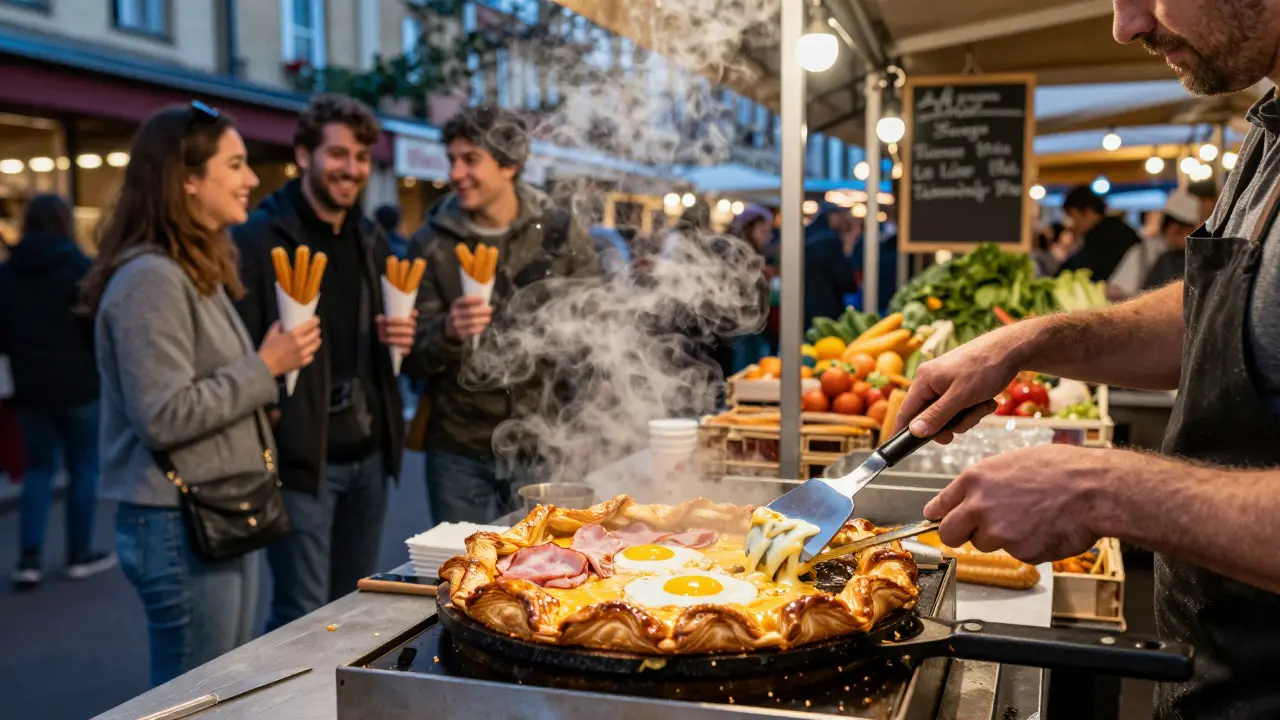
Paris isn’t just about fine dining. Some of its best nighttime eats come from carts, stalls, and tucked-away counters. Head to Marché d’Aligre after 9 p.m. on weekends. The market stalls close, but the food trucks stay open. Try the galette complète-a buckwheat crêpe stuffed with ham, cheese, and a fried egg-from La Crêperie de l’Aligre. It’s greasy, warm, and perfect after a few drinks.
Or find Le Mokam near Place de la République. This West African street food joint serves thieboudienne (Senegalese fish and rice) and niébé (black-eyed pea stew) until 2 a.m. The owner, Awa, is from Dakar and cooks everything from memory. No recipes. Just instinct. The line moves slow, but it moves.
And don’t skip the churros at Churros de Paris in the 10th. They’re not Spanish-they’re French-Spanish hybrids, dusted with cinnamon sugar and dipped in thick, dark chocolate. The owner, a former pastry chef from Lyon, started selling them at 11 p.m. because he noticed people leaving clubs hungry. Now, he sells 300 a night.
The Wine Bars That Turn Into Nightlife Hubs
Parisian wine bars aren’t just places to sip. They’re social engines. At Le Verre Volé in the 11th, you’ll find 300 natural wines by the glass. The staff doesn’t just recommend-they ask what you ate earlier, what mood you’re in, and what you’re willing to spend. Then they pour you something unexpected: a skin-contact Pinot Grigio from Slovenia, a fizzy Gamay from the Jura, a red so light it tastes like crushed berries and rain.
At Bar à Vin in Montmartre, the wine list is handwritten daily. The owner, Jean-Pierre, is 72 and still pours every glass himself. He’ll tell you which bottle pairs with the cheese you just bought from the shop next door. He doesn’t care if you’re a tourist. He cares if you’re curious.
And then there’s Le Chateaubriand-a restaurant that doubles as a bar after 11 p.m. The chef, Inaki Aizpitarte, serves small plates that blur the line between dinner and party snack: squid ink croquettes, smoked eel on rye, pickled quail eggs. The music gets louder. The crowd gets younger. The wine flows. It’s not a restaurant. It’s a late-night gathering.
Midnight Desserts and Sweet Rituals
Parisians don’t just eat dessert. They treat it like a ritual. At Stohrer, France’s oldest pastry shop (opened in 1730), you can still get baba au rhum at 1 a.m. on weekends. The cake soaks in dark rum for 48 hours. It’s dense, boozy, and served with a dollop of whipped cream that melts into the syrup.
For something modern, try La Pâtisserie des Rêves in Le Marais. Their choux à la crème-light, airy pastry filled with vanilla custard and dipped in chocolate-is a masterpiece. But the real star? The Paris-Brest, a wheel of choux pastry filled with praline cream. It’s named after a bicycle race. It tastes like nostalgia.
And then there’s the crêpe au sucre from the street cart outside the Luxembourg Gardens. No table. No napkins. Just a paper cone, a sprinkle of sugar, and the taste of childhood. It costs €3. It’s the most Parisian thing you’ll eat after midnight.
When to Go, What to Wear, and How to Avoid the Traps
Don’t show up at 7 p.m. expecting the night to be alive. Most places don’t fill up until 9:30 or 10. The best time to eat? Between 10 p.m. and midnight. That’s when the kitchen is firing on all cylinders, the staff is warmed up, and the crowd is still fresh.
Wear something comfortable. Parisians don’t dress up for dinner unless it’s a special occasion. Jeans, a good coat, and sturdy shoes are all you need. Skip the touristy spots near the Champs-Élysées or the Louvre. Those places charge €45 for a plate of pasta and serve it with a side of indifference.
And here’s the golden rule: if a restaurant has a menu in five languages, a photo of the chef on the wall, and a sign that says “Best in Paris,” walk away. The real gems don’t advertise. They whisper.
What You’ll Remember
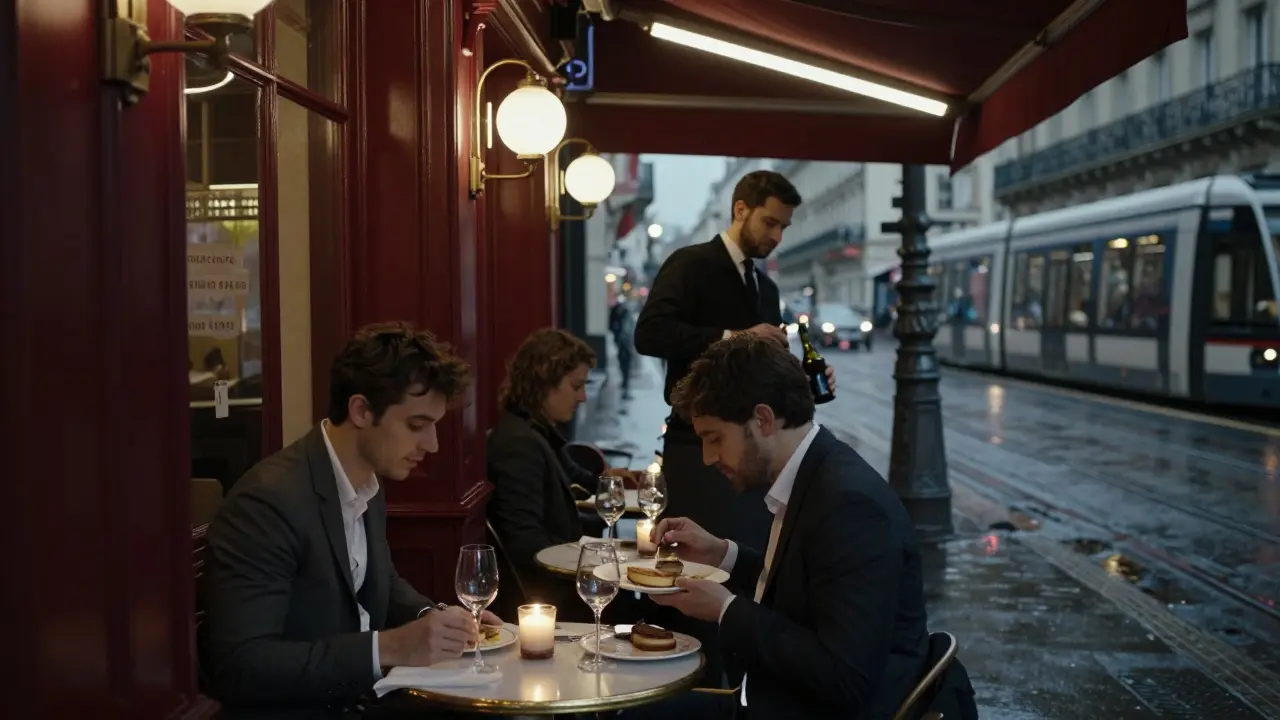
You won’t remember the name of every place you ate at. But you’ll remember the warmth of the waiter who brought you an extra glass of wine because you looked tired. You’ll remember the way the streetlights glowed on wet cobblestones after the rain. You’ll remember the silence between bites, the laughter that rose from a corner table, the taste of a warm baguette torn apart with your fingers at 1 a.m. with someone you just met.
Paris by night isn’t about checking off restaurants. It’s about letting the city feed you-not just your stomach, but your soul. And the best part? It’s always waiting.
Is it safe to eat out in Paris at night?
Yes, most areas popular with diners-like Le Marais, Saint-Germain, Montmartre, and the 11th arrondissement-are very safe at night. Stick to well-lit streets and avoid isolated alleys after 2 a.m. The biggest risk isn’t crime-it’s overpaying at tourist traps. Use local recommendations, not Google reviews.
What time do restaurants close in Paris?
Most sit-down restaurants stop taking orders by 11 p.m. or midnight. But many bistros, brasseries, and wine bars serve food until 1 a.m. or even 2 a.m., especially on weekends. Places like Le Petit Vendôme and Churros de Paris are open 24 hours. Always check the sign or call ahead if you’re planning a late meal.
Do I need to make reservations for late-night dining?
For popular spots like Le Comptoir du Relais or Le Chateaubriand, yes-book ahead. But many hidden gems don’t take reservations. Walk-ins are welcome, and often preferred. If you’re flexible, show up between 10:30 p.m. and 11:30 p.m. You’ll get a better seat and a more relaxed vibe than if you come at 9 p.m.
Can I find vegetarian or vegan food in Paris at night?
Absolutely. Le Potager du Marais offers vegan French classics like lentil stew and mushroom tart until 1 a.m. In the 10th, Vegan Folie’s serves jackfruit tacos and cashew cheese plates until midnight. Even traditional bistro menus now often include a veggie option-ask for the plat du jour without meat.
What’s the average cost for a late-night meal in Paris?
At a casual bistro or street stall, expect to pay €15-€25 for a main course and a glass of wine. At a mid-tier restaurant like Le Baratin, €35-€50 covers a full meal with wine. High-end places like Le Comptoir du Relais run €60-€80, but you’re paying for the experience, not just the food. Street food like crêpes or galettes cost €3-€8.
Caspian Beauchamp
Hello, my name is Caspian Beauchamp, and I am an expert in the world of escort services. With years of experience in the industry, I have developed a deep understanding of the dynamics and nuances of escort services in various cities. My passion for writing has led me to share my insights and knowledge through articles and blog posts, helping others navigate the world of companionship and pleasure. I pride myself on providing honest, accurate, and engaging content that appeals to a wide range of readers. Join me as I explore the fascinating world of escorts and the unique experiences they offer in cities around the globe.