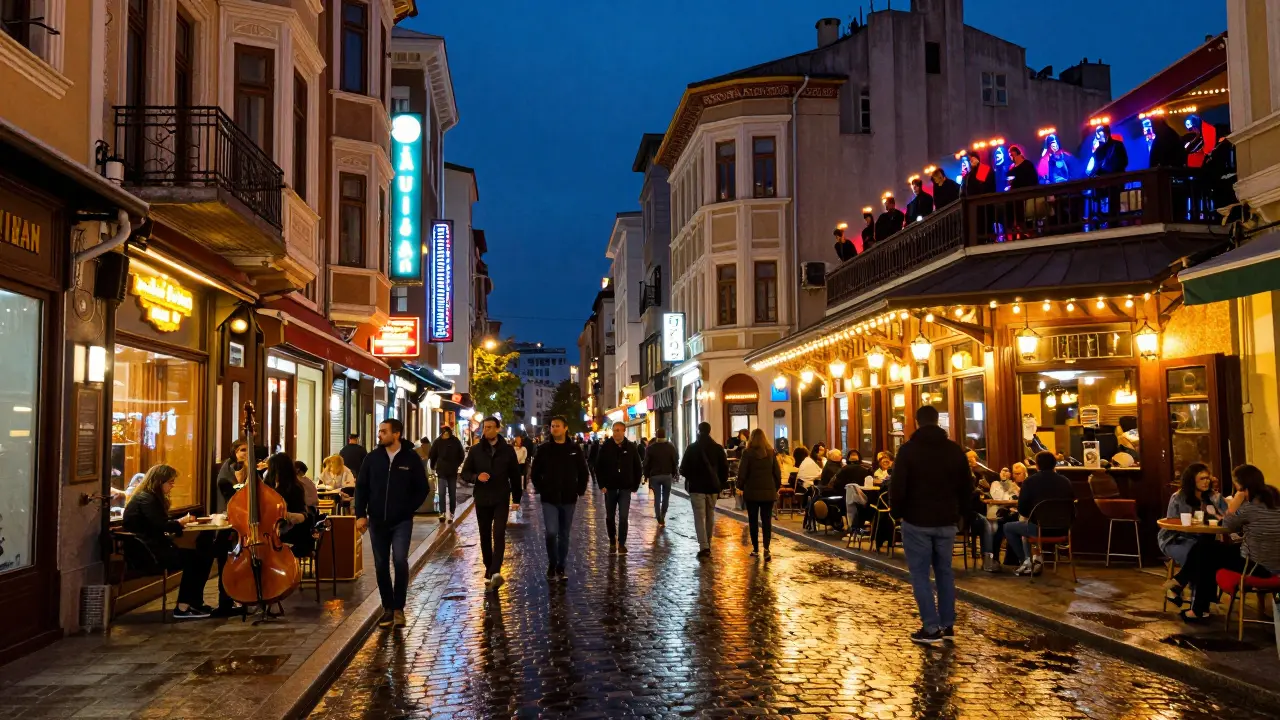
Walk down İstiklal Avenue after midnight and you’ll hear French jazz bleeding into Turkish pop, Arabic oud harmonizing with electronic beats from a basement club, and the clink of raki glasses echoing between Ottoman-era buildings. Istanbul doesn’t just have nightlife-it has layers. Each corner of the city offers a different rhythm, shaped by centuries of migration, trade, and rebellion. This isn’t just about drinking or dancing. It’s about how a city that straddles two continents turned its chaos into something beautiful, loud, and deeply human.
Where East Meets West on the Dance Floor
Start in Beyoğlu, the heart of Istanbul’s modern nightlife. Once a hub for European diplomats and artists in the 1800s, today it’s where Greek tavernas sit next to Iranian hookah lounges and Russian techno warehouses. The streets here pulse with energy, but the real magic happens off the main drag. Head into a narrow alley behind Galatasaray High School and you might stumble into Bar 1914, where a former jazz musician from Aleppo plays ney flute while a Turkish DJ mixes in samples of Sufi chants. The crowd? Tourists, expats, Syrian refugees, and Istanbul locals who’ve been coming here since they were teens. No one asks where you’re from. They just hand you a glass of çay or a shot of rahat lokum-infused vodka.
Down in Karaköy, the vibe shifts. Once a port district for Venetian merchants, it’s now home to sleek rooftop bars like 360 Istanbul and hidden speakeasies like Whiskey & Smoke. But here, the cultural blend is quieter. You’ll find Japanese bartenders crafting cocktails with sumac and pomegranate molasses, while a Lebanese oud player performs live on weekends. The drinks are expensive, but the stories? Free. Ask the bartender how long they’ve been here. You’ll hear answers ranging from three months to thirty years.
The Bosphorus After Dark
Most visitors think of the Bosphorus as a daytime cruise spot. But at night, the water becomes a floating stage. Ferries don’t just transport people-they carry music. On weekends, you can hop on a public ferry from Eminönü to Kadıköy and hear live bağlama music from a group of musicians who’ve been playing on the deck for over a decade. No tickets, no cover. Just the sound of strings and voices carried across the cold, dark water, echoing off the minarets of Üsküdar.
For something more exclusive, book a table on a gulet-a traditional wooden yacht-converted into a floating nightclub. These boats cruise the Bosphorus after 11 p.m., with DJs spinning everything from Anatolian folk remixes to house music. The lights of the Dolmabahçe Palace glow behind you as the boat passes under the Bosphorus Bridge. Locals call it the “floating wedding.” It’s not just a party-it’s a ritual. People come to celebrate engagements, divorces, birthdays, and sometimes, just to forget the day.
Street Food That Keeps the Night Alive
Nightlife in Istanbul isn’t just about clubs. It’s about the smell of grilling kebabs, the sizzle of simit on hot iron, and the sticky sweetness of dondurma that won’t melt no matter how late it gets. Head to the streets around Taksim after 2 a.m., and you’ll find food stalls run by Kurdish women from Diyarbakır, Armenian bakers from Kuzguncuk, and Azerbaijani grill masters who’ve been here since the 90s.
Try the midye dolma-mussels stuffed with spiced rice-at a cart near the Galata Bridge. The vendor, a man named Mehmet who’s been selling them since 1987, doesn’t speak English. But he knows your order before you do. He’ll hand you a paper cone of warm mussels with a squeeze of lemon and a sprinkle of chili flakes. No menu. No price list. Just trust.
And don’t miss the lokma stands near the Spice Bazaar. These deep-fried dough balls, soaked in syrup and sprinkled with cinnamon, are the unofficial dessert of Istanbul’s night owls. They’re served by elderly women who’ve been making them the same way since their grandmothers taught them. One bite, and you understand why people stay out until sunrise.

Underground Scenes and Secret Spaces
Not everything in Istanbul’s nightlife is loud or tourist-friendly. Some of the most powerful experiences happen in places you won’t find on Google Maps. In the basement of an old printing house in Fatih, there’s a weekly gathering called Çatı-Turkish for “roof.” It’s a space for queer artists, poets, and musicians who’ve been pushed out of mainstream venues. No alcohol. No lights. Just candles, poetry readings, and improvised music. The walls are covered in handwritten notes from visitors: “I found my voice here,” one reads. “I didn’t know I was lonely until I came,” says another.
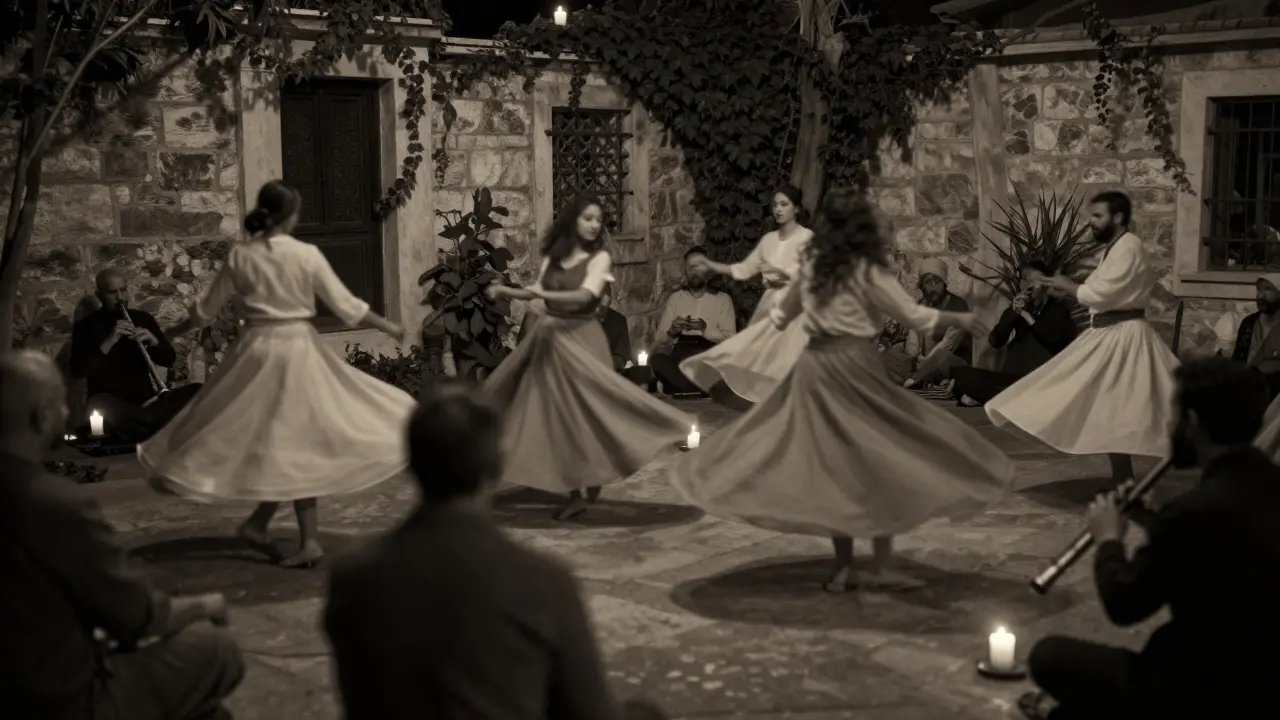
Similarly, in the hills of Üsküdar, there’s a hidden garden where Sufi dervishes perform whirling rituals every Friday night. Locals call it “the place where time stops.” You need a friend to get in. No flyers. No tickets. Just show up at 10 p.m. with an open heart. The music? A single ney flute and a frame drum. The dancers? Men and women, young and old, from every background. No one watches. Everyone participates.
Why Istanbul’s Nightlife Feels Different
What makes Istanbul’s nightlife stand out isn’t the number of clubs or the price of cocktails. It’s the fact that here, culture isn’t packaged. It’s lived. You won’t find a “Turkish Night” theme party where someone in a fez dances with a fake hookah. Instead, you’ll find a 70-year-old Armenian woman playing piano in a bar in Nişantaşı while her granddaughter films it for TikTok. You’ll hear a Syrian refugee singing a Kurdish love song in a basement in Şişli, and a crowd of 50 people-Turks, Germans, Egyptians, Brazilians-singing along.
This city doesn’t just tolerate difference. It eats it, digests it, and turns it into something new. The music? A mix of Ottoman court melodies and Berlin techno. The drinks? Raki with a splash of matcha. The dance? A blend of belly dance and hip-hop.
There’s no single “Istanbul night.” There are dozens. Maybe hundreds. And each one belongs to someone who didn’t expect to find a home here-but did anyway.
What to Expect If You’re New
If this is your first time, here’s what you need to know:
- Don’t rush. Istanbul’s night doesn’t start until 11 p.m. and doesn’t end until dawn.
- Carry cash. Many small venues don’t take cards.
- Respect the silence. Some places are meant for listening, not shouting.
- Ask questions. Locals love sharing stories-especially if you show real interest.
- Wear comfortable shoes. You’ll walk miles, up and down hills, through alleys, across bridges.
And most importantly-don’t try to “experience” it like a checklist. Let it find you.
Is Istanbul nightlife safe for solo travelers?
Yes, but like any big city, it’s smart to stay aware. Areas like Beyoğlu, Karaköy, and Kadıköy are well-lit and crowded late into the night. Avoid isolated streets after 3 a.m., especially near the docks. Most locals will help if you look lost. Don’t hesitate to ask for directions-even if you don’t speak Turkish, a smile and a pointing finger usually work.
What’s the best night to experience live music in Istanbul?
Fridays and Saturdays are the busiest, but the most authentic music happens on Wednesdays. That’s when many underground venues-like Çatı in Fatih or Blue Note Istanbul in Nişantaşı-host local artists who aren’t performing elsewhere. You’ll hear raw, unpolished sounds you won’t find on Spotify. No crowds. No influencers. Just music.
Are there any places that cater specifically to LGBTQ+ travelers?
Yes, but they’re often quiet and discreet. Bar 1914 and Leather & Lace in Beyoğlu are two of the most welcoming spots. Both have been around for over a decade and are run by locals who’ve fought to keep these spaces alive. You won’t find rainbow flags everywhere, but you’ll feel safe. The community here doesn’t need to shout to be seen.
Can I find vegetarian or vegan food at Istanbul nightlife spots?
Absolutely. Places like Vegetarian Street in Kadıköy and Green House in Beyoğlu serve plant-based kebabs, lentil stews, and vegan ayran until 3 a.m. Even traditional spots like Çiya Sofrası have vegan mezes on their late-night menu. The city’s food culture has always been rich in legumes, vegetables, and grains-so vegan options aren’t a trend here. They’re the norm.
What’s the dress code for Istanbul nightlife?
There’s no strict dress code. In rooftop bars, people dress up a bit. In underground clubs or street food alleys, jeans and sneakers are fine. The key is comfort. Istanbul’s nights are long, and you’ll be walking a lot. Modesty isn’t required, but showing respect for local norms helps. Cover your shoulders in religious neighborhoods like Üsküdar, and avoid overly flashy clothes if you’re heading to a Sufi gathering.
Where to Go Next
After you’ve soaked in the sounds of Beyoğlu and the silence of the Bosphorus, consider exploring the lesser-known districts. In Üsküdar, try the İsmail Ağa tea house where elderly men play backgammon until 4 a.m. In Kadıköy, visit the Moda Park open-air cinema on summer nights-screening Turkish classics under the stars. And if you’re still awake by sunrise, head to the Galata Tower. The view at dawn, with the call to prayer echoing across the city, is the quietest, most powerful moment of Istanbul’s night.
Caspian Beauchamp
Hello, my name is Caspian Beauchamp, and I am an expert in the world of escort services. With years of experience in the industry, I have developed a deep understanding of the dynamics and nuances of escort services in various cities. My passion for writing has led me to share my insights and knowledge through articles and blog posts, helping others navigate the world of companionship and pleasure. I pride myself on providing honest, accurate, and engaging content that appeals to a wide range of readers. Join me as I explore the fascinating world of escorts and the unique experiences they offer in cities around the globe.